Birdwatching 101: The Art of Noticing
I. Introduction
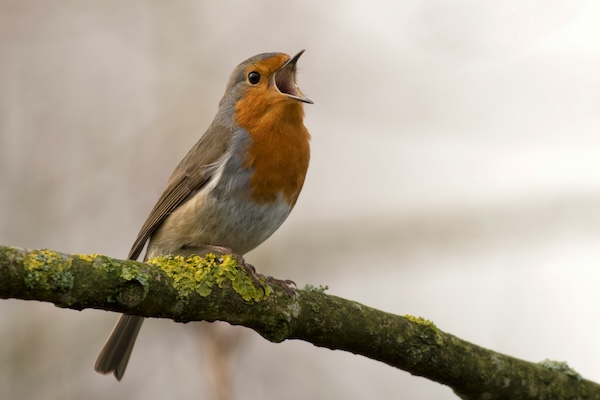
Birds tend to disappear into the background of our lives. We see a flash of red or hear a chirp and move on with our day.
But by ignoring birds, we do ourselves a great disservice. A bird is not just a pretty song or a garden ornament. It is a creature that can navigate halfway across the globe using a built-in magnetic compass. It is a communication specialist that uses complex vocal coding to defend territory and find love. It is a dinosaur that figured out how to hollow out its own bones to cheat gravity.
In this elective, we are going to stop looking at birds and start birdwatching. We are going to learn how to read a bird like a detective, using silhouette, behavior, and habitat to identify species in seconds. Plus, we'll learn how to use technology you probably already own to turn your backyard into a field research station.
Study this if: You really liked Pokémon GO, you want a collecting hobby that takes up zero shelf space, or you just want to know who is screaming outside your window at 6 AM.
II. Recommended Reading
The Sibley Guide to Birds
This is the bible of American birding. Unlike photos, which can be deceptive based on lighting, Sibley’s hand-drawn illustrations highlight the specific field marks (wing bars, eye rings) you need to look for to identify a species.
The Genius of Birds
Ackerman explores the incredible cognitive abilities of birds, from crows that can use tools and recognize human faces to nutcrackers that can remember the exact location of 30,000 hidden seeds.
The Thing with Feathers
Tower travels into the deep, swampy big woods of Arkansas to track the rumored resurrection of the Ivory-billed Woodpecker. It explores the thin line between scientific hope and collective madness, and why birders are willing to spend years hunting for a "ghost." [archived version]
III. The Lecture Hall
LISTERS: A Glimpse Into Extreme Birdwatching
This documentary follows two brothers on a "Big Year," a competitive race to see as many species as possible in 365 days. It is a raw, funny, and sometimes grueling look at the subculture of "listing," the van-life reality of birding, and the mental shift from recreational watching to obsessive data collection.
Bird Brain
To understand the bird, you must understand the brain. This full-length documentary explores high-level avian intelligence, problem-solving, and social cooperation, proving that "bird-brained" is actually a compliment.
The National Geographic Guide to Birding in North Americ
A technical masterclass in using "GISS" (General Impression of Size and Shape) and behavioral quirks, like how a bird bobs its tail or its specific style of flight, to identify species when color isn't visible.
The Birdwatchers
A more meditative look at the hobby. This short film focuses on birding as a tool for mindfulness, urban connection, and conservation, contrasting the "Extreme Lister" lifestyle with the quiet joy of local observation.
The Dark Side of Birding: Top 5 Birding Controversies You Need to Know About
Every subculture has its drama. This video covers the ethical debates of modern birding: the use of digital playback to lure birds, the ethics of "owl baiting," and the gatekeeping of rare bird locations.
IV. Guided Coursework
Bird Academy
While these courses require a fee, they are the gold standard for bird education. If you are committed to a zero-cost path, you can apply for Bird Academy Course Assistance to receive one course of your choice (like Joy of Birdwatching) completely free.
Paleontology: Theropod Dinosaurs and the Origin of Birds
If you want to go hard on bird history, audit this course. It bridges the gap between the Jurassic period and your bird feeder. It explores the anatomy of theropods and how feathers, flight, and endothermy evolved. Select "Audit" during enrollment for free access.
V. The Lab
Option A: The "Life List" Launch
Start your data collection.
- Download the eBird App (The global database for bird sightings).
- Go to a local park or even just your backyard for 20 minutes.
- Record every bird you see or hear. Even the "common" ones like pigeons or sparrows.
- Submit your first checklist. Your data now officially contributes to global ornithological research used by scientists to track climate change and migration.
Option B: The "Sound ID" Walk
Merlin Bird ID is Shazam for birds. Download it now.
- Go to a park (or just your backyard).
- Open the Merlin Bird ID app.
- Tap "Sound ID" and hit the microphone button.
- Watch the screen. As it detects birds, it will pop up their names and photos in real-time.
- When you see a name pop up, look around and try to find the bird making the noise. Connect the sound to the visual.
VI. Capstone Project
Design and execute a project that demonstrates your ability to "read" the avian world. You can use one of the following prompts to inspire your project:
- The Urban Adaptation Study: Choose one common urban species (e.g., Rock Pigeon, House Sparrow). Observe them in two different locations: a high-traffic urban area and a quiet park. How has human infrastructure altered their foraging behavior or social structure?
- The Field Guide: Create a 5-page visual guide for the birds in your immediate neighborhood. Instead of using photos, create silhouettes that highlight their GISS. What are the 3-4 distinct visual "shortcodes" you use to identify them at a distance?
- The Evolutionary Link: Select one bird in your yard and trace its lineage back to its theropod ancestors. What specific physical "technologies" (e.g., the furcula/wishbone, feathers, hollow bones) does it still utilize today that were present in the Jurassic era?
Want more inspo on how to apply your newfound knowledge? Check out our list of capstone project ideas here!
VII. Extra Credit
- Movie: The Big Year (2011) Starring Jack Black, Steve Martin, and Owen Wilson. It’s a comedy about three guys trying to break the record for seeing the most bird species in a single year. It perfectly captures the obsession, the competitiveness, and the joy of the hobby.
- Field Trip: Find a "Hotspot" on the eBird Hotspot Map near you. Visit it at sunrise.
- Look Up: r/birding. There's no better way to get to know a hobby than diving into a forum packed with its most dedicated followers.