Mycology 101: The World Eaters
I. Introduction
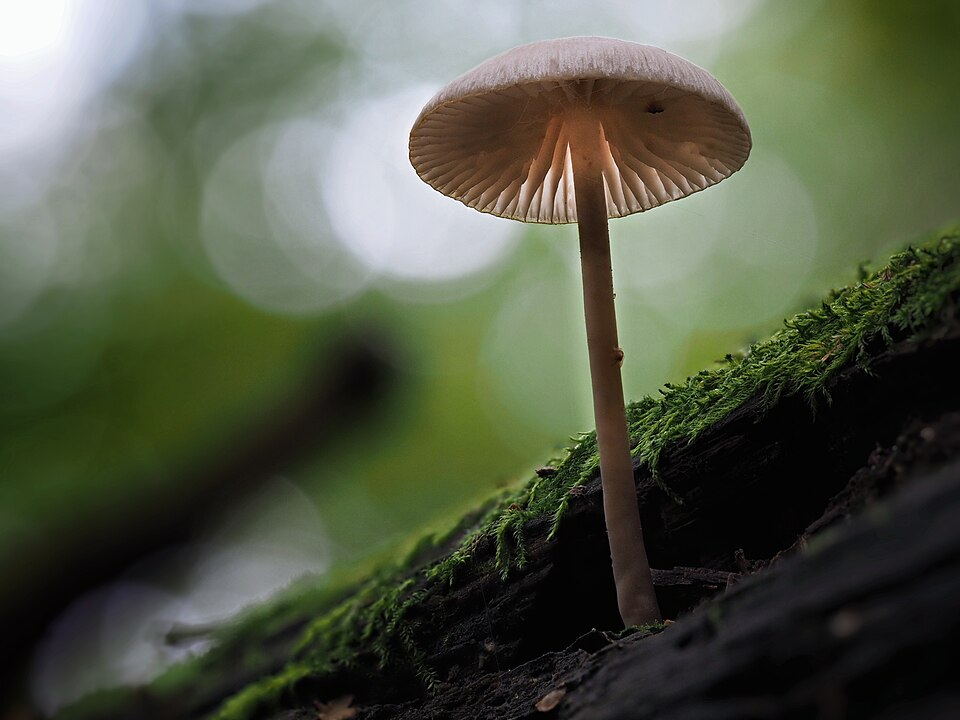
If you walk into a lush, green forest, you tend to see life everywhere. But if you look closer, you realize you are actually walking through a massive graveyard.
Leaves, branches, animal bones, and massive tree trunks are constantly dying and falling to the forest floor. In a sterile world, this debris would pile up until it choked the planet. We would be buried under miles of dead wood.
So why aren't we?
Enter the fungi. They are the janitors of the planet, the biological incinerators that prevent the world from drowning in its own waste. They are the only organisms on Earth that have evolved to unlock the energy trapped in wood (lignin).
In this elective, we aren't looking up at the canopy; we are looking down at the rot. We'll learn how fungi digest rocks to create the very first soil, how they can be trained to eat oil spills and plastic, and how they act as the gatekeepers between life and death.
Study this if: You're fascinated by the cycle of life, you want to know how to clean up a polluted planet, or you have a Tupperware container in the back of your fridge that you are too scared to open.
II. Recommended Reading
The Hidden Kingdom of Fungi
Most fungi aren't mushrooms; they're the invisible molds, yeasts, and spores floating in the air right now. Seifert moves the spotlight away from the pretty "fruit" and onto the microscopic majority that actually run the ecosystem. This book explains exactly how a spore lands on a fallen log and dismantles it molecule by molecule.
Entangled Life: How Fungi Make Our Worlds, Change Our Minds, and Shape Our Futures
Focus especially on the chapters regarding lichens. You'll learn how fungi (partnering with algae) literally eat volcanic rock, dissolving it with acid to create the Earth’s first soil. It reframes fungi not just as recyclers, but as world-builders.
Mycelium Running: How Mushrooms Can Help Save the World
If fungi can eat wood, what else can they eat? Paul Stamets argues that we can train mycelium to digest complex hydrocarbons like diesel fuel, pesticides, and even plastic. This is the manual for "mycoremediation," the practical science of using rot to clean up our mess.
III. The Lecture Hall
6 Ways Mushrooms Can Save the World
Paul Stamets explains the versatility of mycelium. In this famous talk, he outlines a blueprint for using fungi to clean up oil spills, kill carpenter ants without poison, and even fight smallpox.
Fungi: Death Becomes Them
"Death is pretty much what fungi are all about." This rapid-fire biology lesson explains _how_ the World Eaters actually eat. You will learn why fungi are more related to you than to a salad, how they digest food _outside_ their bodies, and the terrifying mechanics of the real-life "zombie ant" fungus.
Fungi’s Resilience and Intelligence
Can you have intelligence without a brain? Can a slime mold can redesign the Tokyo subway system more efficiently than human engineers? This documentary covers the full spectrum of fungal superpowers, proving that the smartest organism in the room might be the one growing on the walls.
IV. The Lab
Option A: Rot Watch
- Take a slice of bread and a slice of apple.
- Rub them briefly on a surface outside (a railing or tree bark) to pick up wild spores.
- Place them in a sealed ziplock bag with a few drops of water.
- Place the bag in a dark, warm place.
- Check it every day for two weeks. Sketch or photograph the war between blue mold (Penicillium) and black mold (Rhizopus). Note who wins.
Option B: Citizen Science
- Download the iNaturalist app.
- Go to a local wooded area and find, photograph, and upload 5 distinct species of fungi. Don't worry if you don't know the name; the community (and the AI) will help identify it.
- You'll learn more about your friendly neighborhood fungi while contributing to real scientific data.
V. Capstone Project
Create a journal, essay, video or other project that reflects on the following questions:
- Can we partner with the agents of decay to undo the damage of the industrial age?
- Does the concept of "trash" actually exist in nature, or is it a purely human invention?
- We value the Producer (the tree) and the Consumer (the animal). Why does human society fear the Recycler?
Want more inspo on how to apply your newfound knowledge? Check out our list of capstone project ideas here!
VI. Extra Credit
- Play/Watch: The Last of Us. While fictional, the "zombie" fungus is based on a real organism (Ophiocordyceps unilateralis) that hijacks the nervous system of ants. It is a terrifying example of fungal adaptability.
- Activity: Buy a "Countertop Oyster Mushroom Kit" (Back to the Roots or similar). You cut a hole in the box, mist it with water, and within 5 days, you have a massive cluster of mushrooms. It is incredibly satisfying to watch them double in size every morning.
- Field Trip: Visit a local cemetery after a rainy day. Cemeteries are often old, undisturbed grounds with old trees, making them hotspots for fascinating mushroom growth.