The Physical Internet 101: Following the Wire
I. Introduction
It's easy to think of the Internet as a cloud. It’s weightless, invisible, and lives somewhere in the ether above our heads.
But that's a lie.
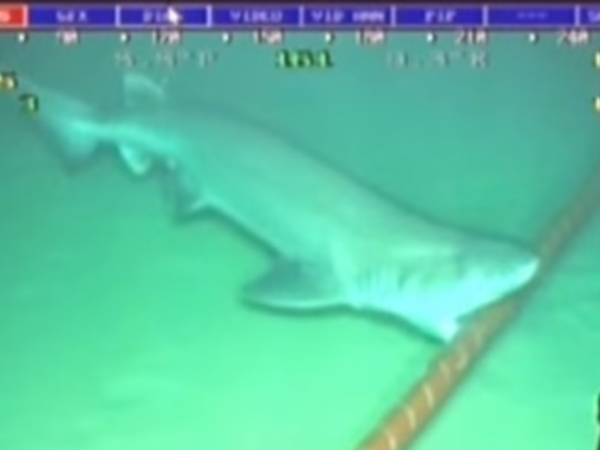
The internet is not a cloud. It's a loud, cold room in Northern Virginia. It's a thick black cable sitting on the bottom of the Atlantic Ocean, getting nibbled on by sharks. It's a physical object (actually, lots of physical objects) that you can touch, map, and accidentally break with a backhoe.
In this elective, we're going to stop treating the web like magic and start treating it like what it actually is: The largest machine humanity has ever built.
We're going to follow the wire from the jack in your wall, down the street, across the ocean floor, and into the windowless buildings where "The Cloud" actually lives.
Study this if: You loved the movie The Matrix, you're fascinated by maps, or you just want to know why your Zoom call lags when it rains.
II. Recommended Reading
Tubes: A Journey to the Center of the Internet
Blum’s internet breaks (literally, a squirrel chews his cable), and he decides to go find where the internet actually is. He visits the secret exchange points in London and the data centers in Oregon, and yes, lots of tubes. It’s travel writing meets tech.
How Internet Infrastructure Works
This article offers a comprehensive (yet comprehensable) breakdown of the "Network of Networks." It moves from the local LAN in your office up to the massive fiber backbones that connect continents. [archived version]
Mother Earth Mother Board
Author Neal Stephenson travels the globe to watch the longest wire on Earth get thrown into the ocean (it's a lot more exciting than it sounds). Victorian history, high-seas engineering, and political intrigue collide as he unearths the messy, rust-covered reality that powers our digital lives. [archived version]
The deep-sea 'emergency service' that keeps the internet running
When your Wi-Fi goes down, you reboot the router. When a whole continent's Wi-Fi goes down, they call these guys. This article profiles the specialized repair ships that patrol the oceans 24/7, fixing the cables snapped by anchors, earthquakes, and shark bites. It's a fascinating look at the blue-collar workers who keeping the digital world alive. [archived version]
III. The Lecture Hall
What is the Internet, really?
If you don't have time to read Tubes, watch this. Blum takes you on his physical tour of the internet, from the basement of a New York apartment building to the windswept beaches where the fibre optics come ashore.
The Dark Side of AI Data Centers
It's easy to think of data as silent and invisible. This investigation travels to "Data Center Alley" in Virginia, where residents can hear the constant physical hum of the internet through their walls, and to Arizona, where servers drink millions of gallons of water a day.
The Trillion-Dollar Battle for Fiber-Optic Supremacy
Cables aren't just neutral pipes anymore; they are territory. This explains the new "Cold War" happening on the ocean floor, as nations like the U.S. and China fight to control who actually owns the glass strands that carry the world's secrets.
How A Million Miles Of Undersea Cables Power The Internet — And Now AI
This mini-doc explores the massive infrastructure boom happening right now to support ChatGPT and other models. It highlights just how much physical "stuff" is required to make computers "think."
IV. Guided Coursework
The Bits and Bytes of Computer Networking
If you want to understand the actual mechanics behind the tubes and wires you just read about, this Google course is the perfect next step. It strips away the mystery of the cloud to show you exactly how data physically travels through cables, switches, and routers to get to your screen. Click "Enroll for Free" and then select "Audit" at the bottom of the popup.
Internet History, Technology, and Security
If you were fascinated by how the internet follows old Victorian trade routes, you’ll love this course. You’ll travel back in time to meet the actual people who designed the original infrastructure, explaining why the physical network looks the way it does today. Click "Enroll for Free" and then select "Audit" at the bottom of the popup.
V. The Lab
Option A: Map Your Data
Let’s see the path your data takes right now.
- Open "Terminal" (Mac) or "Command Prompt" (Windows).
- Type:
traceroute google.com(Mac) ortracert google.com(Windows) and hit Enter. - Watch the list populate. Each line in the output represents a hop to another physical router.
- Paste the results into a Traceroute Mapper to see the path in map form and watch your data travel around the world in milliseconds.
- Bonus: Try running the same test with and without a VPN. How does it change the path your data takes?

Option B: Follow Those Wires!
Find the exact physical point where the internet enters your life.
- Trace the Wire: Follow the cable from the back of your router to the wall.
- Go Outside: Go to the exterior wall of your house/apartment building corresponding to that spot.
- The Box: Look for a grey or beige plastic box (The NID - Network Interface Device). Open it (if accessible) or look at the wires leaving it. Do they go up a pole? Underground? That single thin wire is your entire connection to the rest of the online world.
- The Code: In the U.S., utility workers use a universal color code to mark buried lines. Walk around your block. Look for orange spray paint or orange flags; that's the physical path of the data flowing into your neighborhood!
VI. Capstone Project
Create a journal entry, essay, or video reflection answering the following:
- If the internet is a physical place, who owns the territory?
- How does the physical geography of cables and data centers impact censorship and surveillance? (i.e., If all cables enter a country through one beach, how easy is it to turn off the internet?)
- What happens to society if a squirrel (or a shark, or a submarine) cuts the wrong wire?
Want more inspo on how to apply your newfound knowledge? Check out our list of capstone project ideas here!
VII. Extra Credit
- Movie: WarGames (1983). Before fiber optics, the internet was acoustic. You had to use a phone line and a modem to physically "scream" data at another computer. This movie perfectly captures the era when "being online" meant physically connecting two machines with copper wire.
- Field Trip: If you live near a major tech hub (Northern Virginia, Silicon Valley, Prineville OR, or any number of seemingly random suburbs), you might live near a data center without knowing it. Look for a large building with no company logo (or a generic shell company name), few windows, high security fences and cameras. Listen for a constant, low-level drone of massive HVAC fans. Who owns this facility? How has it impacted the surrounding community, positively or negatively?
- Google This Next: "Satellite internet". Ok, so not all internet traffic travels via underground and underwater tubes. At least, not entirely. A good chunk of internet traffic takes a detour to outer space, thanks to satellite internet services. Visit satellitemap.space to see the thousands of low-orbit Starlink satellites currently enveloping the Earth.